(300%20%C3%97%20300px).png)
Healing the Invisible Wounds
Trauma Support For Holocaust Survivors Today

Eighty years after the Holocaust, the trauma has not faded.
Holocaust survivors in Israel continue to face some of the highest rates of PTSD, depression, and anxiety of any elderly population in the country. Many endured not only the horrors of the Holocaust but also immigration trauma, wars, terrorism, and — most recently — the emotional shockwaves of October 7th. For some, these events reopen wounds that never fully healed.
Helping Hand Coalition (HHC) is stepping into this urgent need with compassion, expertise, and a commitment to trauma‑informed care.
A Safe Place to Talk About What Hurts
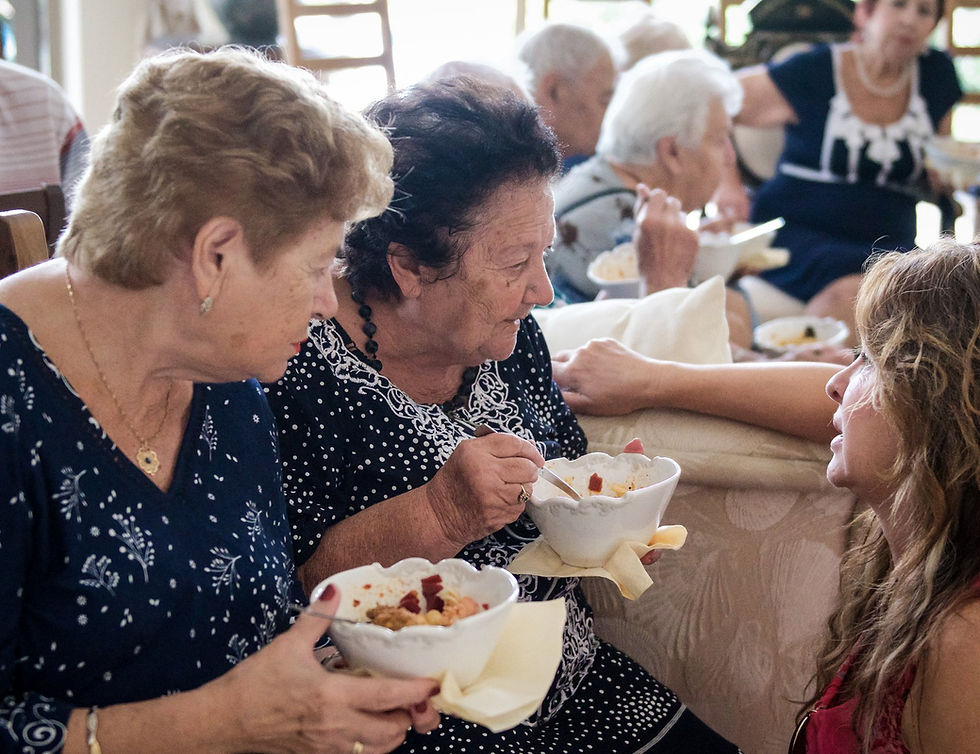
At Shalom House gatherings, survivors have been meeting psychologists like Irena Tishchenko, who gently guides them through conversations about stress, fear, aging, and emotional resilience.
In one session, survivors explored the five emotional spheres — fear, anger, sadness, happiness, and disgust — learning how each affects the body and how to calm overwhelming feelings.
In another, they discussed intergenerational relationships, burnout, and the importance of rest in the “golden age.”
These are not casual conversations. They are lifelines.
Expert Training for a Nation in Trauma
In November, HHC hosted Dr. Herbert Scheiblich, a leading trauma specialist with more than 40 years of experience. He trained staff and volunteers on:
How PTSD affects the brain
Trauma’s biological, psychological, social, and spiritual dimensions
Practical tools for supporting survivors
The impact of transgenerational trauma
His visit strengthened HHC’s ability to care for survivors with sensitivity, professionalism, and deeper understanding.
Why This Work Matters
Survivors often say that Shalom House is the only place where they feel safe enough to speak openly about their emotions. Many carry trauma silently, afraid of burdening their families.
HHC provides:
Trauma‑informed talks and support groups
Safe spaces for emotional expression
Compassionate guidance from trained professionals, staff and volunteers
Community that reduces isolation and fear
This is healing work — slow, gentle, and profoundly needed.
Your Support Helps Heal Invisible Wounds
With your help, HHC can continue offering:
> Emotional support sessions
> Trauma‑informed training for staff and volunteers
> Safe, welcoming gatherings for survivors
> Programs that restore dignity, peace, and emotional stability
Your donation becomes part of their healing — a gift of comfort, understanding, and hope.

Healing the Wounds No One Sees - Trauma does not fade with age.
Your donation helps fund trauma‑informed care, support, and safe spaces for emotional healing.



Comments